
A village built around a baglio
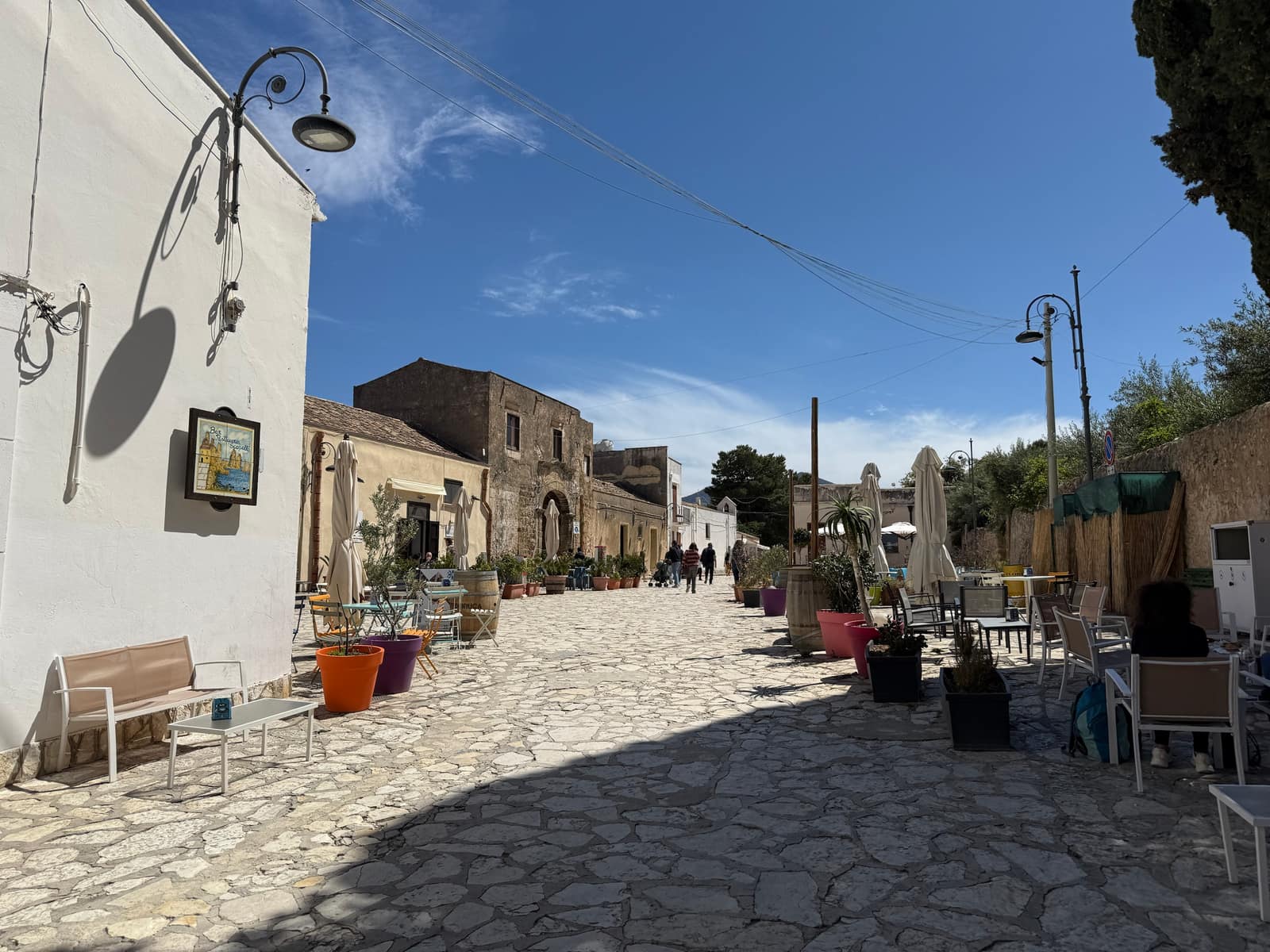
Scopello is not an ordinary village: it is a baglio, a large farm courtyard enclosed by stone buildings, around which a small farming community grew. The baglio you see today dates from the 18th century, but it seems to reuse far older Arab-Norman structures: the stone foundations are still visible along its north and west sides.
In the 19th century, Ferdinand II of Bourbon made this land a royal hunting reserve. Today the village is quiet and welcoming, full of B&Bs and small hotels, and it has kept its human scale: you can walk across it in a few minutes, but you will want to stay.
What to see in the village
The village is small: the joy is in walking slowly. These are the spots I always show my guests.
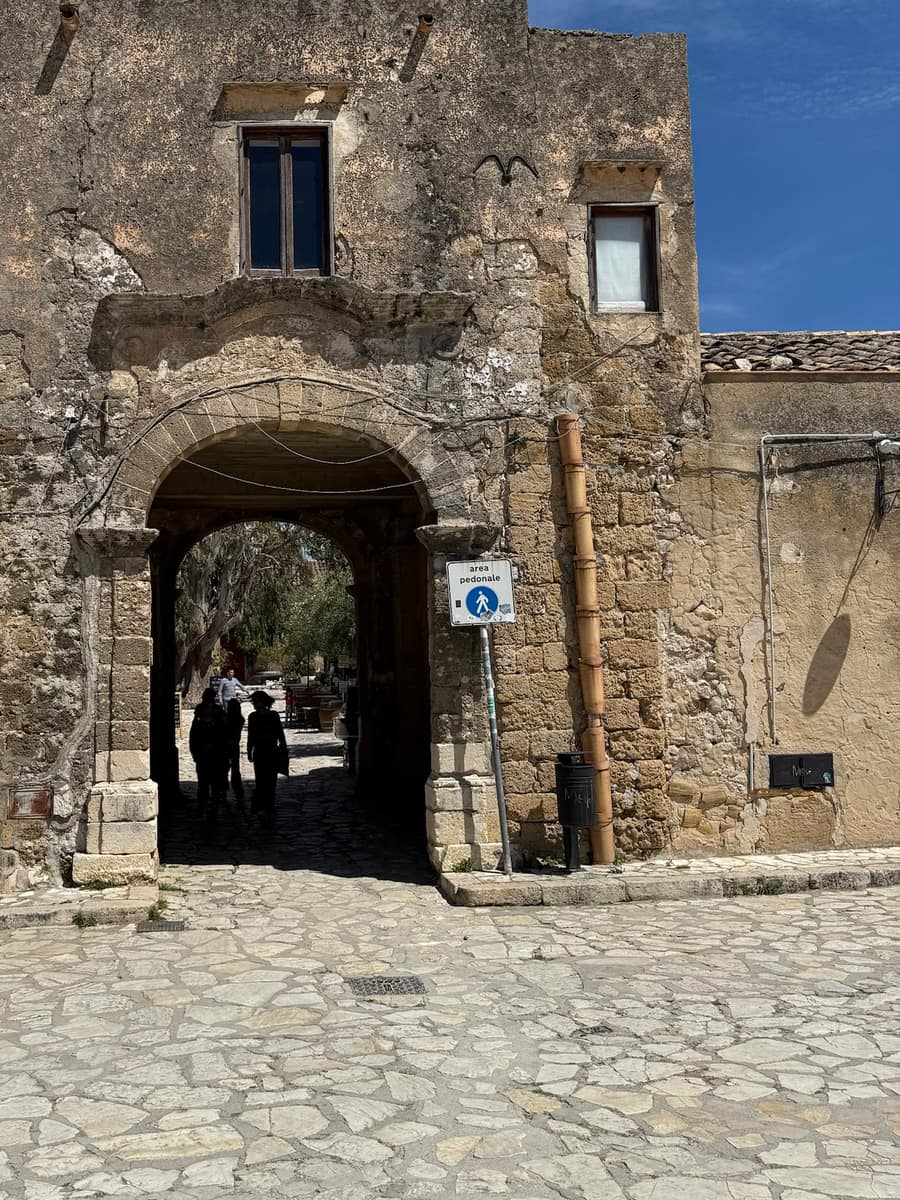
- The baglio archway
- You enter the heart of the village through a large stone arch: on the other side the main street opens up, paved in stone and lined with outdoor tables.
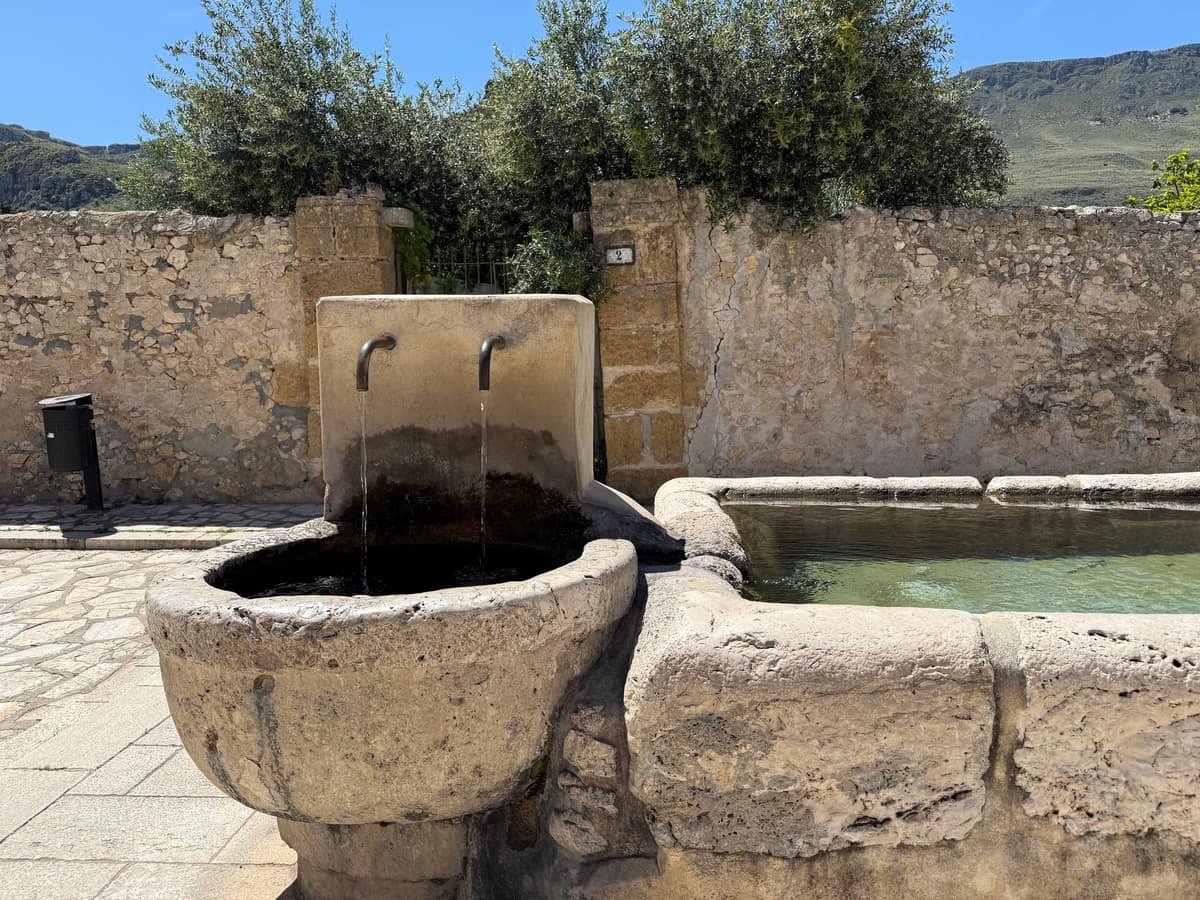
- The fountain
- In the middle stands the large stone trough with its running spouts: in summer it is where everyone stops to cool off.
- The street of cafés
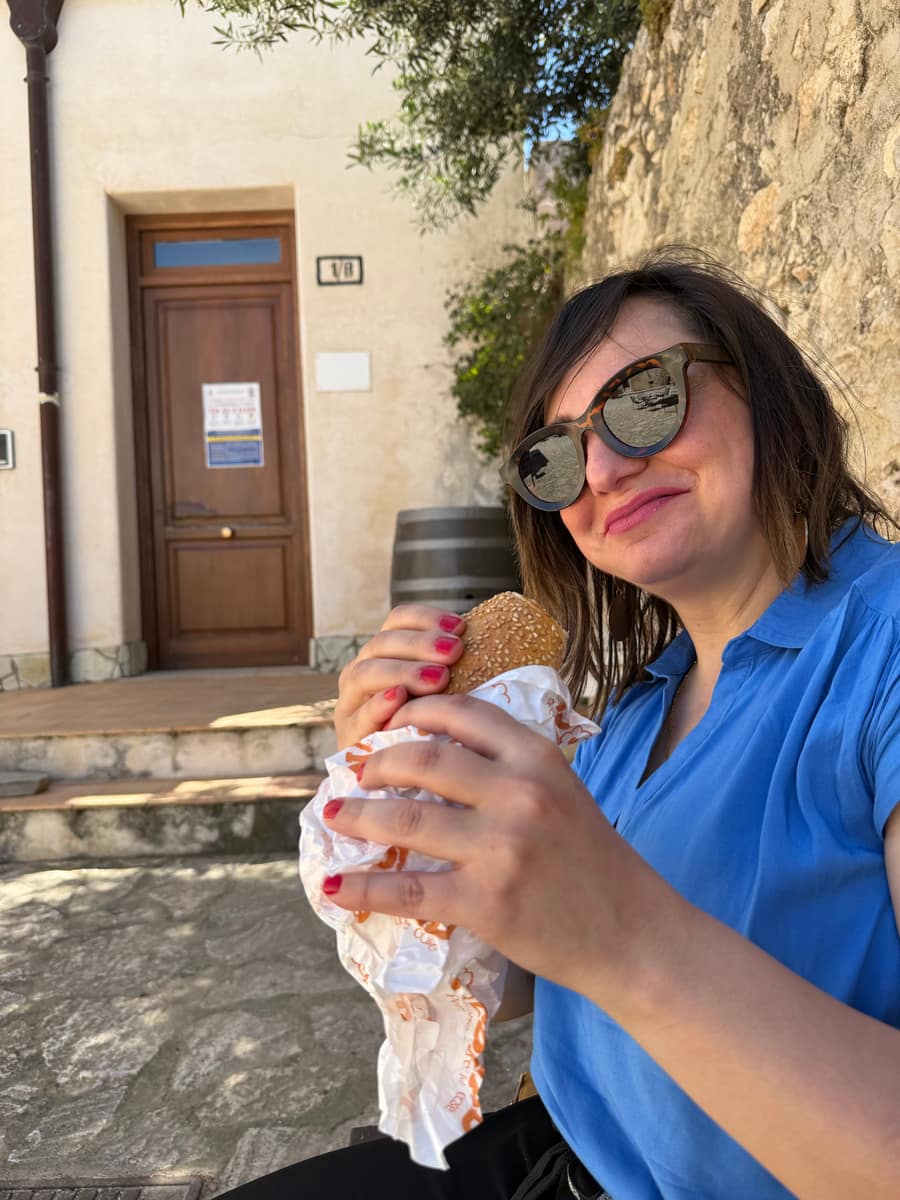
- Bakery, restaurants, gelato shop and bars side by side: the right place to sit down and rest after the trail.
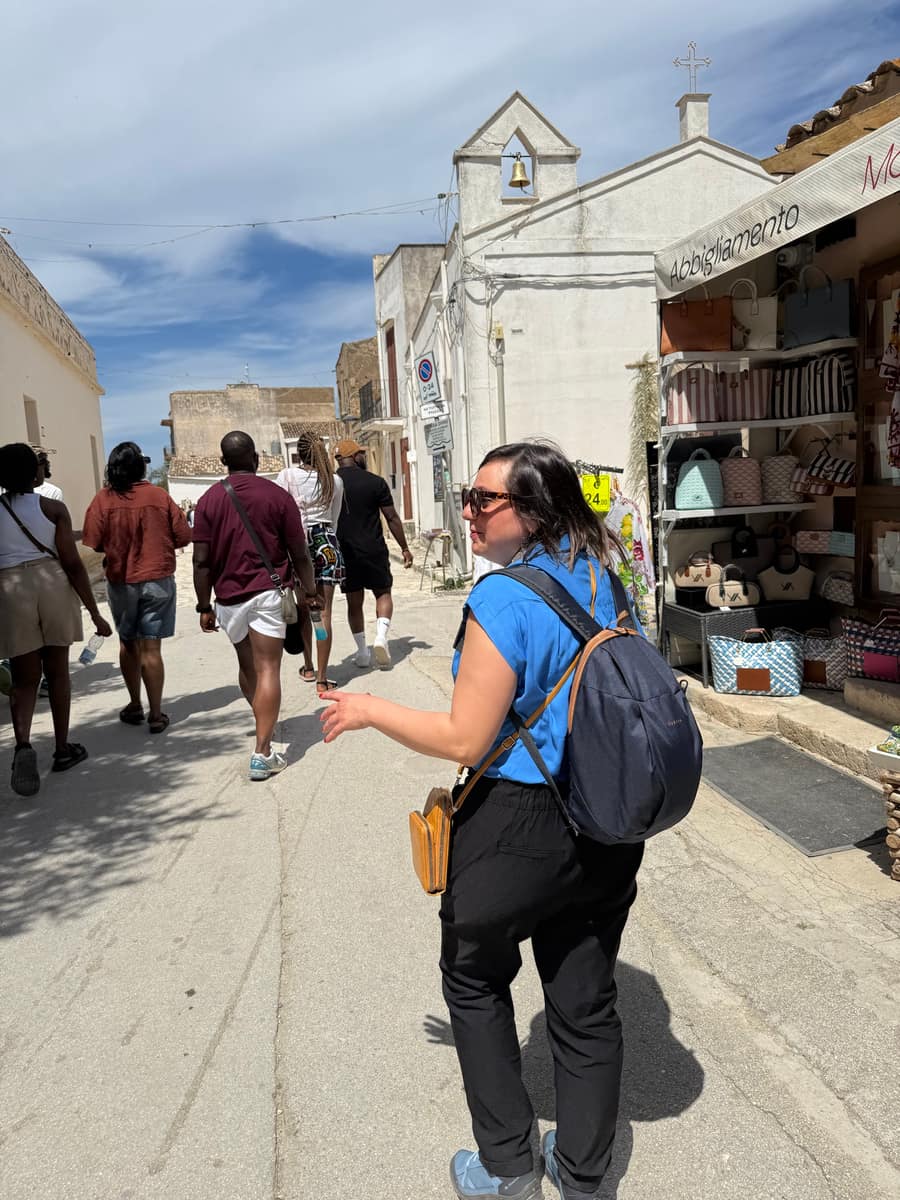
- The shops
- Straw hats, bags, ceramics and Sicilian souvenirs among the village’s low houses.
- The viewpoint over the Tonnara
- Just outside the village, along the road down to the sea, the view opens onto the Tonnara, its towers and the sea stacks.
The Tonnara, the towers and the sea stacks
Below the village lies the Tonnara di Scopello, one of the oldest and most important tuna fisheries in Sicily. Its first buildings date from the 13th century; in the 15th century the Sanclemente family turned it into a working tonnara, then it passed to the Jesuits and finally to the Florio, the great Palermo business family also tied to the tonnara of Favignana.
Its towers kept watch over it. One is medieval, and only a few ruins remain; the other is from the 16th century, the work of the architect Camillo Camilliani, who in those years designed the network of watchtowers along the Sicilian coast. They were there to spot Barbary corsair ships in time and raise the alarm along the coast. Above the village, on a cliff, stands the Torre Bennistra, also from the 16th century.
In front of the Tonnara the sea stacks, the faraglioni, rise from the water: they have become the symbol of Scopello. Today the Tonnara is private: you visit it with an entrance ticket, which lets you see the complex up close and, in the warm season, swim in the bay.
Opening times, tickets and sea access at the Tonnara can change with the season: check before you go.
Where to eat in Scopello
You eat well in Scopello, and after the reserve I always take my guests to sit down in the village. Here is my personal tip and what to try.
- My place: Made in Sicily
- This is where I always take my guests. The owner, Giuseppe, is a friend: I recommend it because it is where I eat myself, and where I know the people I bring are well looked after.
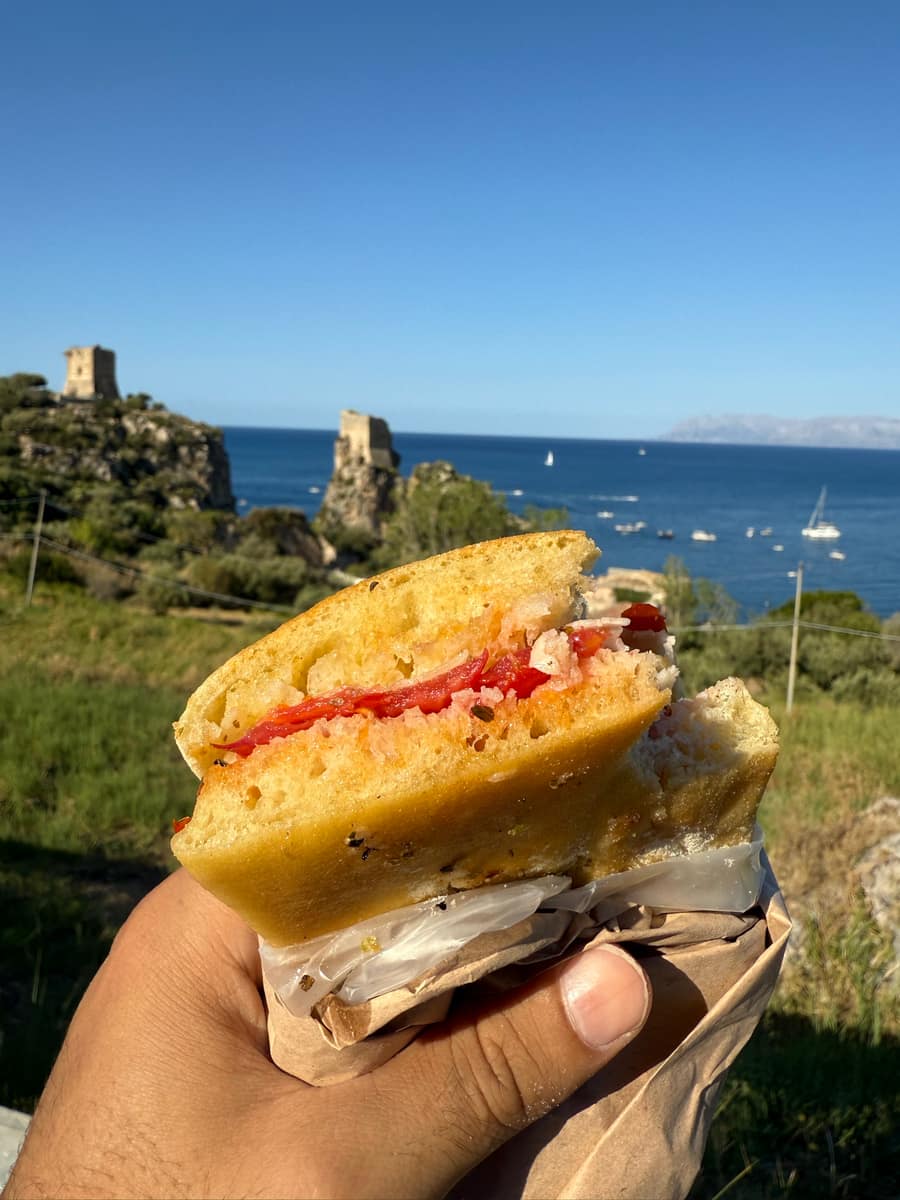
- Pane cunzato
- The village has an old bakery that makes it to order: warm bread dressed with olive oil, tomato, cheese and oregano. My tip: take it with you and eat it looking out over the sea stacks.
- Pasta dishes
- In the village restaurants, pasta is what I always recommend: it is excellent here.
- Fish
- The fish is always fresh, as you would expect from a village that has lived off the sea for centuries.
- Gelato
- The village has its own gelato shop too: the gelato is excellent, perfect by the fountain.
Getting there and pairing it with the Zingaro
Scopello is reached by car: from Palermo, take the A29 motorway towards Trapani, exit at Castellammare del Golfo and follow the signs for Scopello, about an hour and a quarter in all. There is a paid car park at the entrance to the village; the centre is pedestrian.
My favourite plan is simple: the morning in the Zingaro Nature Reserve, while it is cooler, then Scopello for lunch, a stroll and, if there is time, the Tonnara. The reserve’s South entrance is a few minutes from the village.
Before you go
What to bring
- Comfortable shoes: the stone paving is uneven
- Water and a hat, especially in summer
- Swimsuit and towel, if you want to swim at the Tonnara
- A charged phone for photos from the viewpoint